
RailScan 360
DEGREE OBJECTIVE 5
Model, analyze, and design systems or processes that integrate hardware and software to control autonomous mechanical systems.
How it meets the objective: It models and designs a complete hardware-software system — architecture, functional flow, hierarchical schematics, and firmware-driven motion — to control an autonomous scanning machine.
Lead electrical engineer on a two-semester production studio prototype: a rail-mounted 360° scanning system. I owned the motion control and electronics architecture from concept through motor bring-up, built in PDS300/PDS400 Production Studio using KiCad, draw.io, and an RP2040-Zero with TMC2209 stepper drivers.
Project status
The accelerated studio schedule ended before the Raspberry Pi 5 supervisory logic layer was integrated. The delivered state — validated architecture, complete electrical design, and working motor control — is documented accurately here; the Pi 5 integration is defined in the architecture as the next phase.
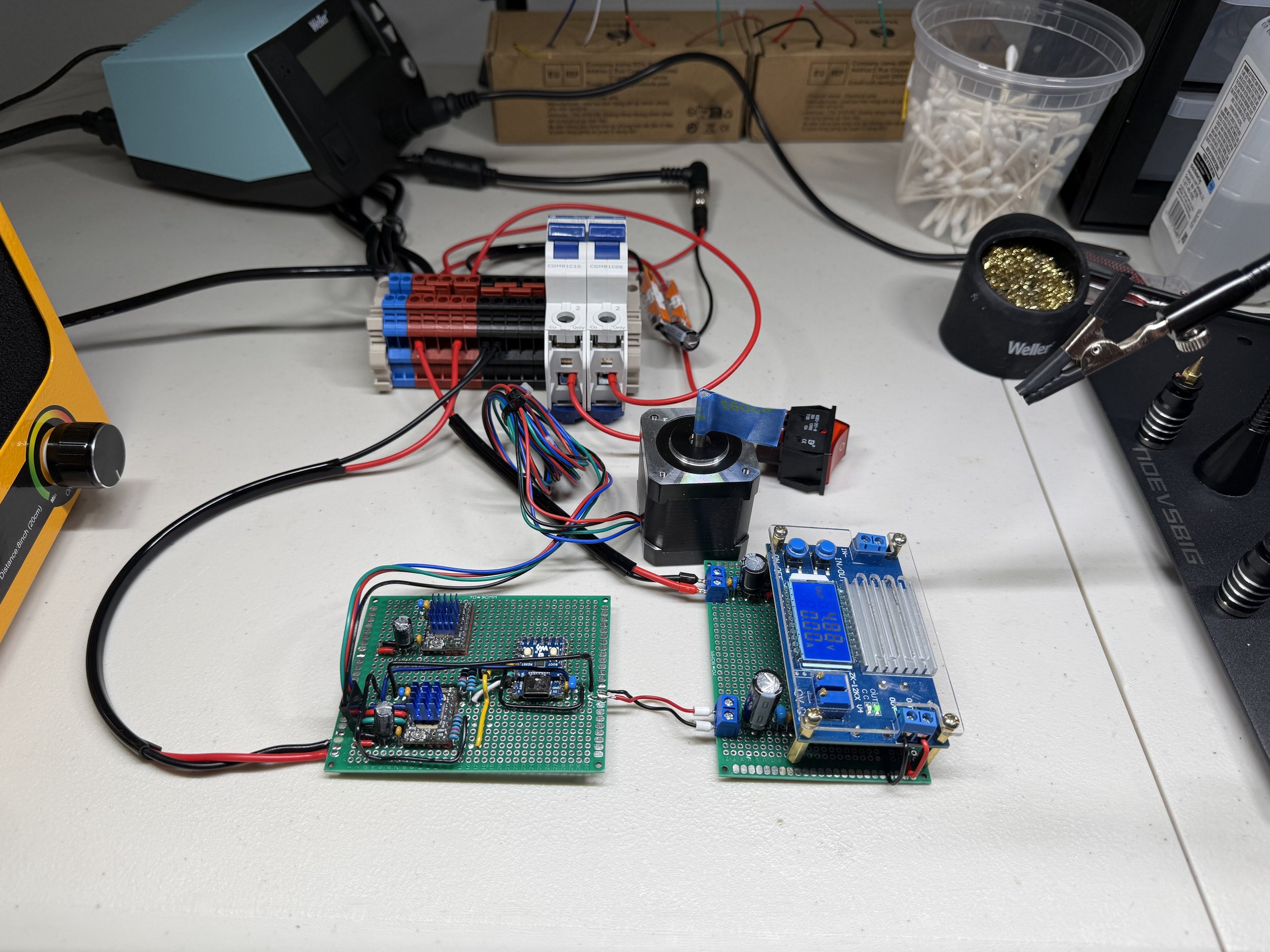
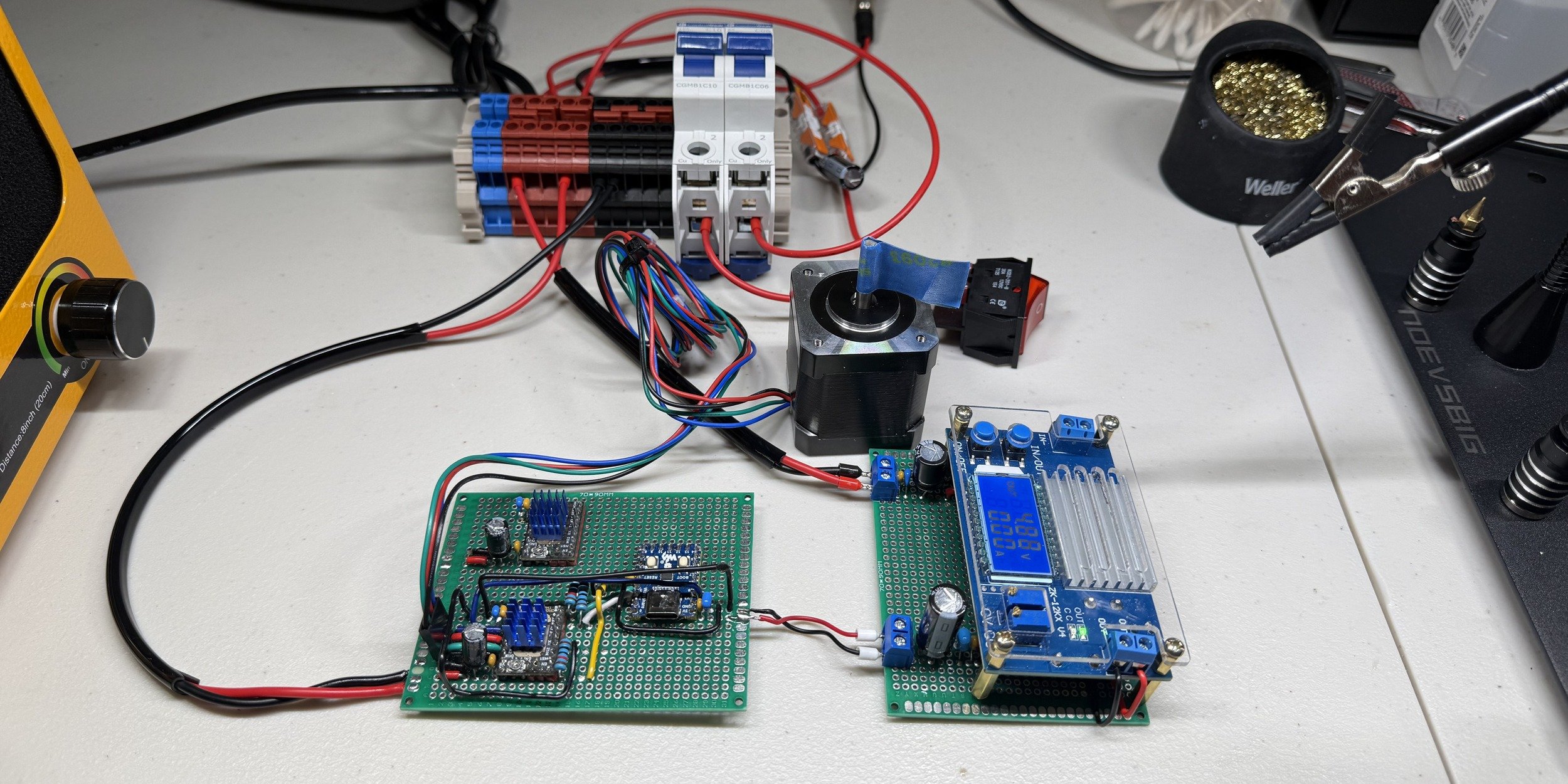
Bring-up bench: soldered perfboard with the RP2040-Zero and both TMC2209 drivers, a second board carrying the 12 V→5 V buck converter, DIN-rail terminal distribution with circuit breakers, and a NEMA 17 stepper under test.
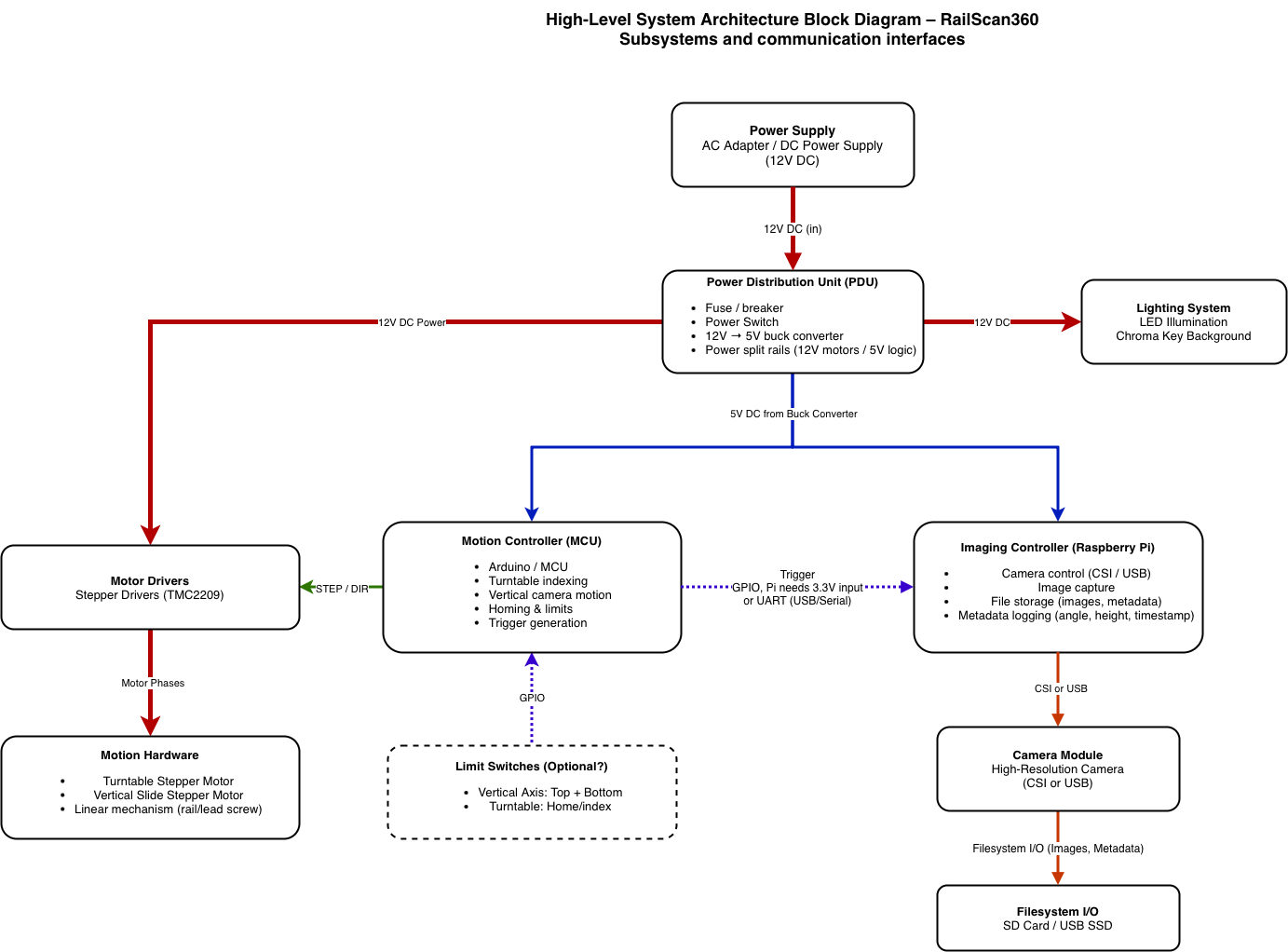
Top-level block diagram: 12 V supply into a power distribution unit feeding the stepper drivers, motion-control MCU, Raspberry Pi imaging controller, and lighting system.
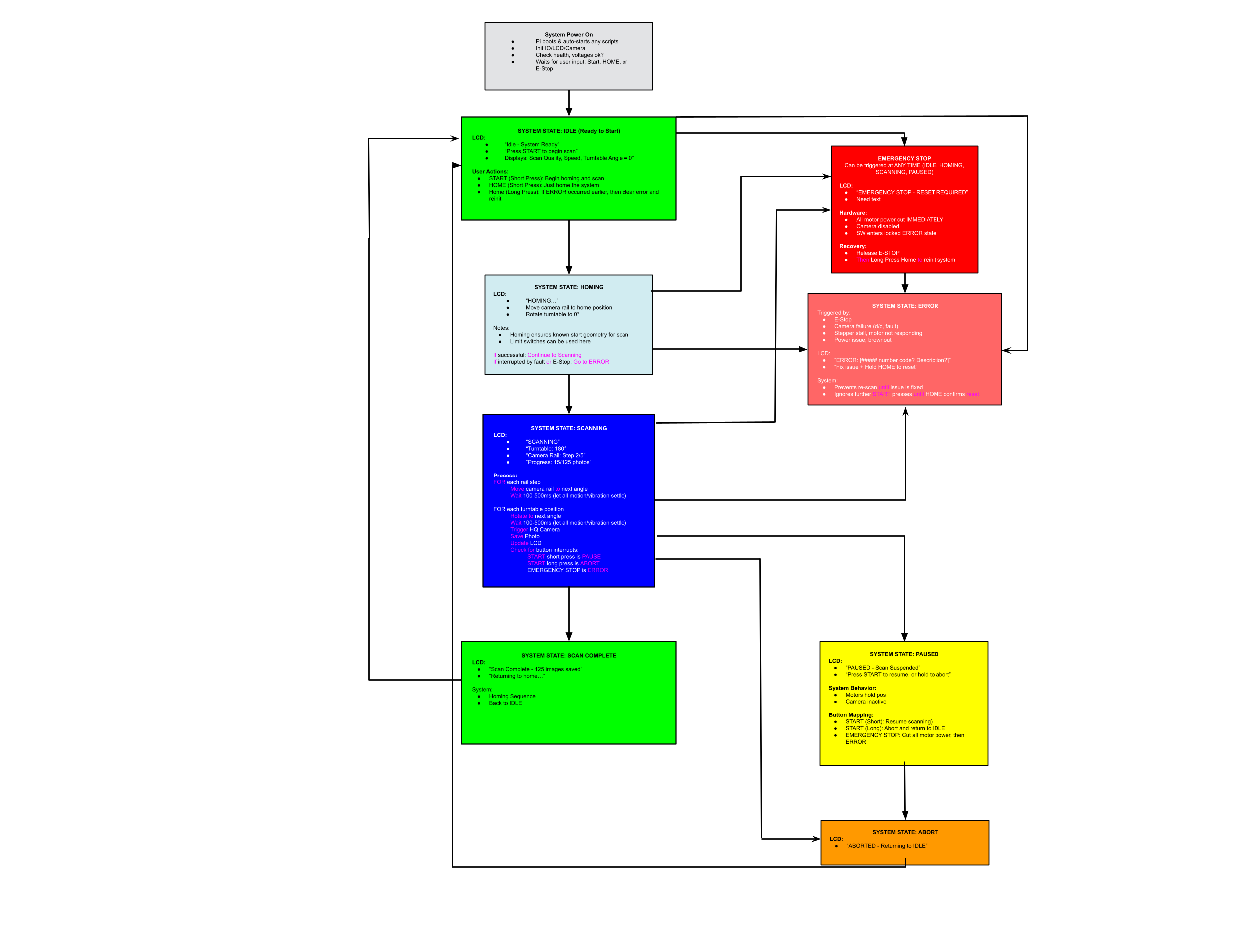
Functional flow from power-on through scan: IDLE → HOMING → SCANNING → SCAN COMPLETE, with PAUSED, ABORT, ERROR, and a hardware E-STOP path that cuts motor power from any state.
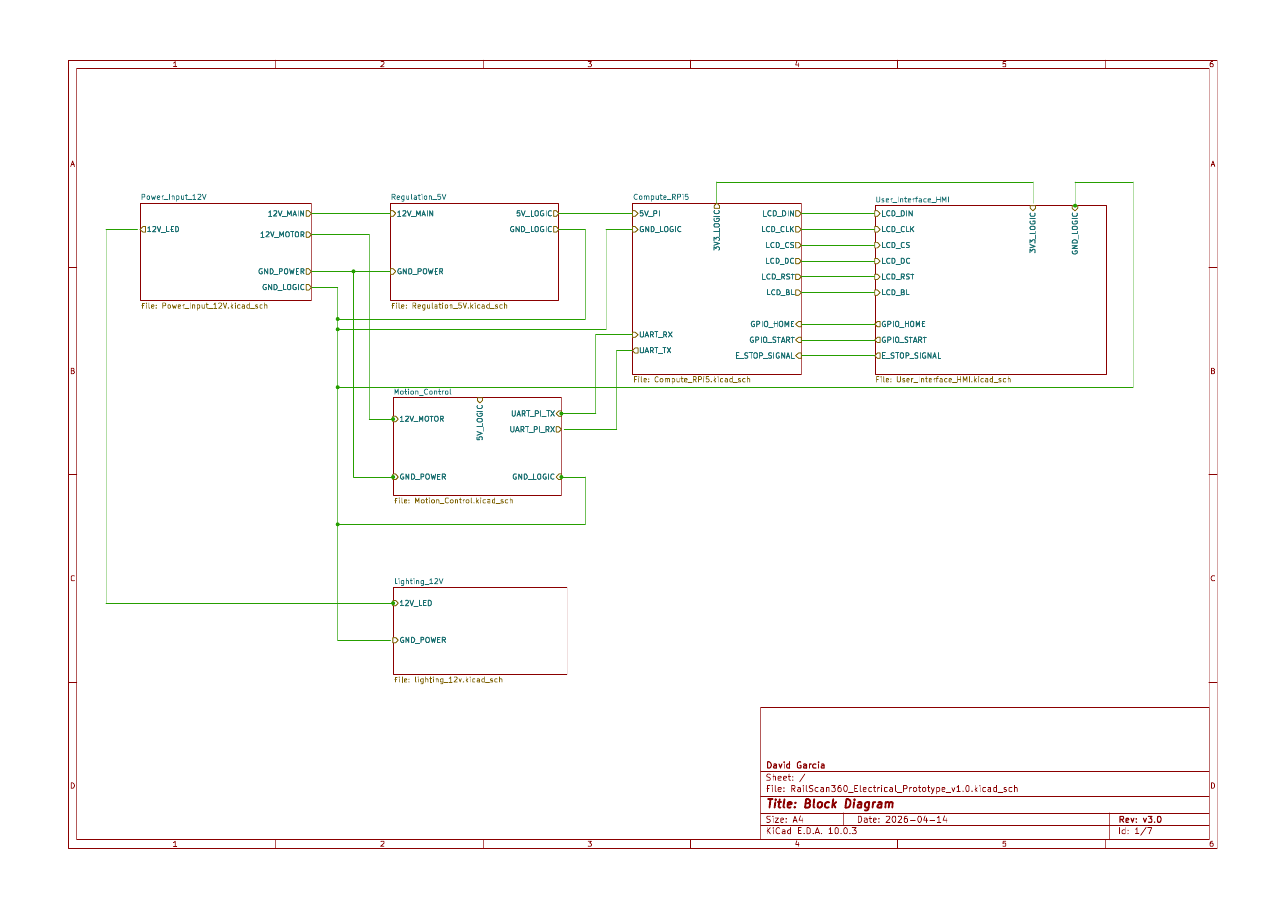
Top sheet of the 7-page hierarchical KiCad schematic — power input, 5 V regulation, motion control, Pi 5 compute, HMI, and lighting as separate sheets with defined interconnects. Full PDF on GitHub.